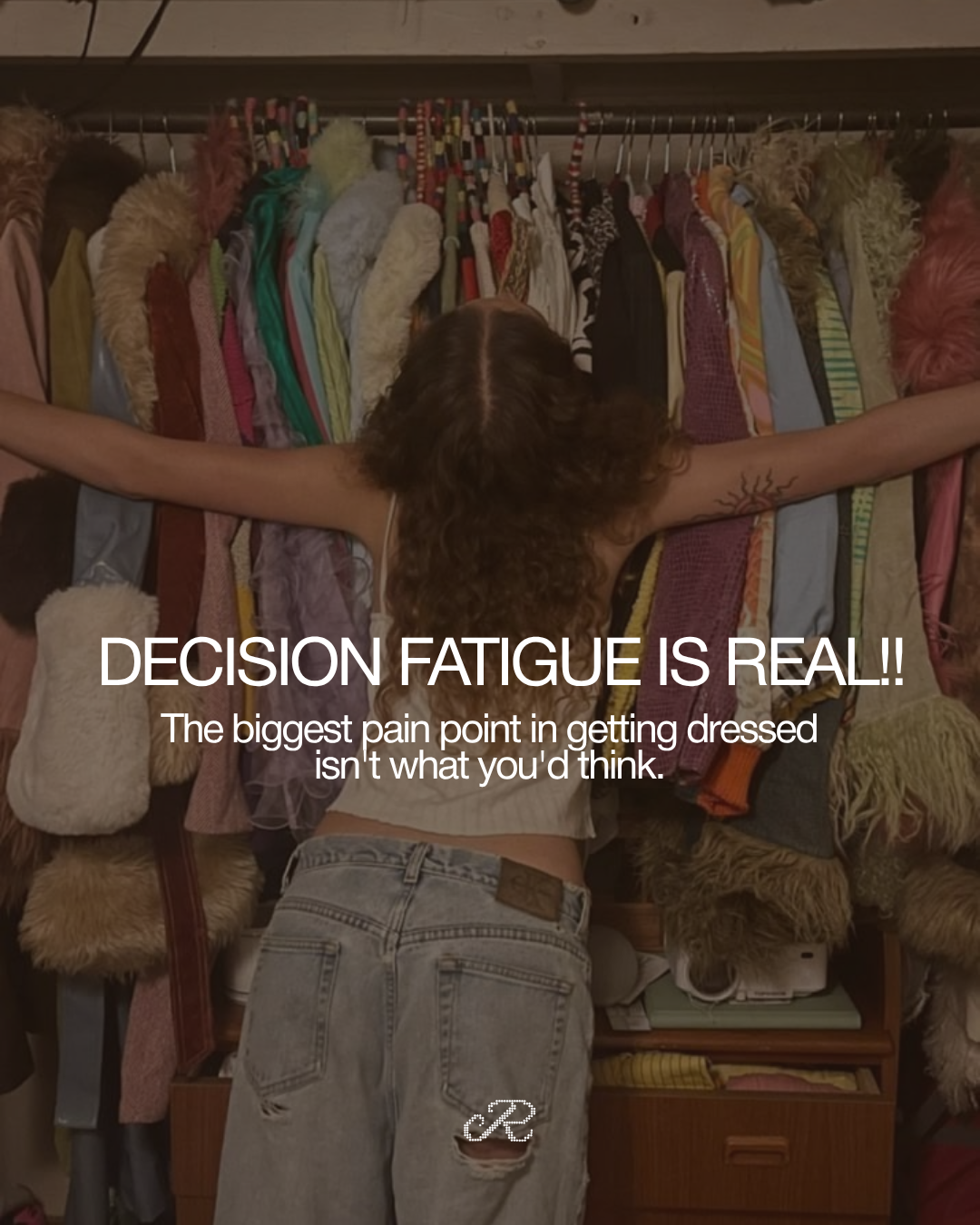
Ask most people what's hard about getting dressed and they'll point to their clothes, not enough options, nothing that fits right, nothing exciting. That's rarely the actual problem.
The 80/20 problem nobody talks about
Most people wear about 20% of their closet 80% of the time. A UK study of 2,000 people found the average wardrobe holds 152 items, but only 44% get worn regularly. The other half just sits there, fully wearable, completely ignored.
That same study found 28% of adults get frustrated enough while getting dressed to throw clothes across the room. One in five have ended up genuinely upset because they couldn't put together the right outfit. One in ten regularly show up late to work over it.
None of that is a clothing shortage. It's something else entirely.
Why more options make it worse, not better
Psychologists call it choice overload. Past a certain number of options, decision quality drops instead of improving. It's the same effect behind Barry Schwartz's Paradox of Choice: owning 100 items doesn't give you 100 more choices, it gives you one much harder decision, first thing in the morning, before your best thinking of the day has even started.
Decision fatigue compounds it. If you've already made a dozen small decisions before you reach your closet, you have less mental energy left to figure out which shirt goes with which pants. So you default to the same five outfits you already know work, not because you lack style, but because your brain is conserving effort. That's not a character flaw. It's just how decision-making works under load.
The real cost adds up
The average American now buys around 64 garments a year, up from about 12 per year in the 1980s. Most of those purchases never become regular wear; they just add more options to a system that was already overwhelmed. Fashion accounts for close to 10% of global carbon emissions, and a meaningful share of that comes from exactly this cycle: buying more because the closet already feels unusable, not because anything is actually missing.
Why this matters
People don't need more clothes to fix this. They need the clothes they already own presented as actual outfits, not a wall of individual pieces they have to mentally reconstruct from scratch every single morning. The fix isn't a bigger wardrobe. It's a wardrobe that's easier to actually see and use.
The real question
Is getting dressed hard because of what's actually in your closet, or because of how much thinking it takes to put it together? For most people, backed by the numbers, it's the second one.