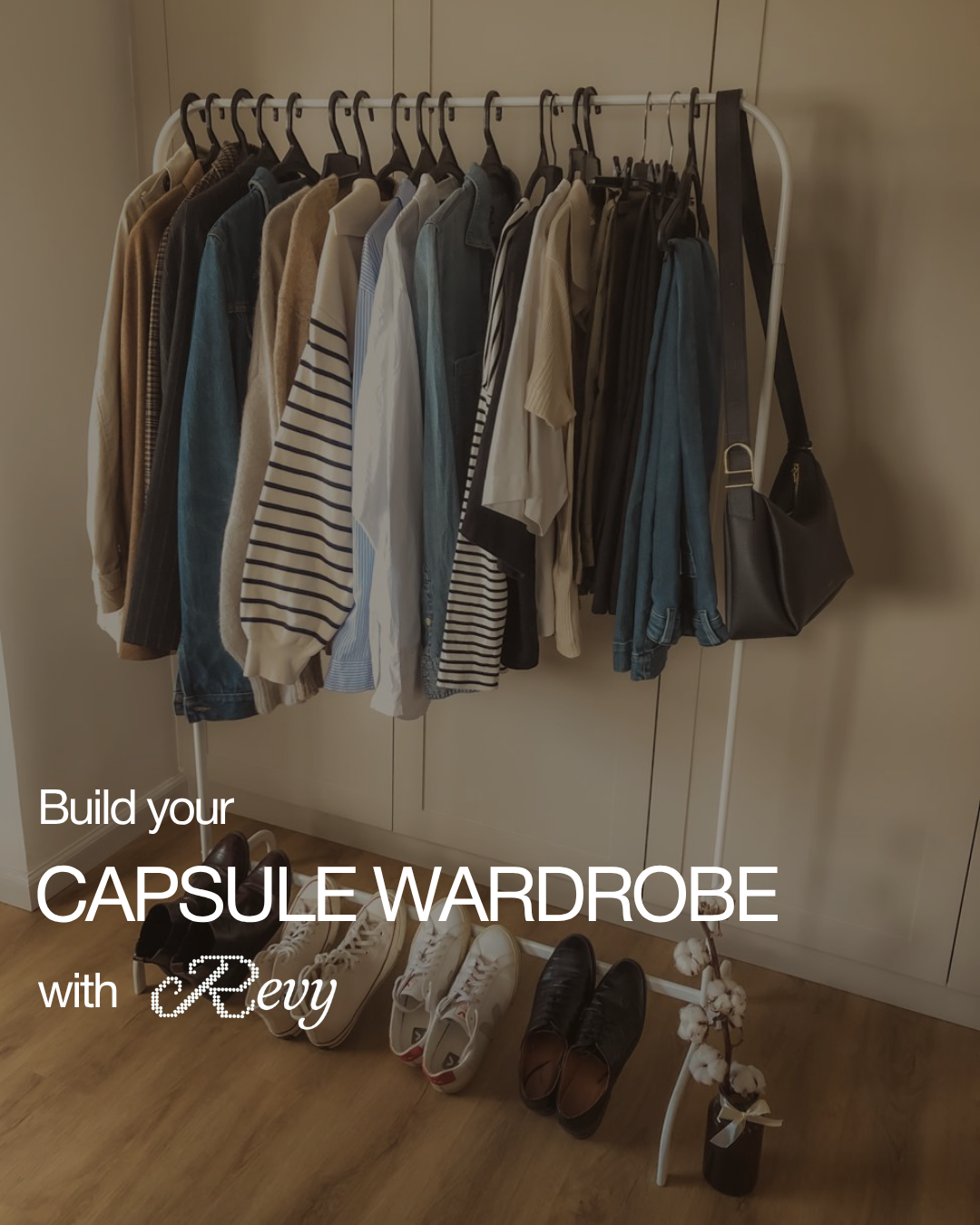
A capsule wardrobe sounds simple: fewer pieces, more outfits. In practice, most people try it once, buy a handful of "essential" basics, and end up right back where they started, a closet full of things that don't quite work together.
Here's how to actually build one that sticks.
Start with what you already own, not a shopping list.
Most capsule wardrobe guides start with a list of things to buy. That's backwards. Before adding anything, take stock of what's already in your closet. You likely own more usable pieces than you think, they're just buried, forgotten, or mismatched with everything else you own.
Pick a color palette that actually works together.
A capsule wardrobe isn't about owning fewer clothes, it's about owning clothes that combine well. Stick to 2-3 neutral base tones and 1-2 accent colors. This is the step most people skip, and it's the reason capsule wardrobes fail. Pieces that don't share a palette can't be mixed and matched.
Audit for cost per wear, not price tag.
A $200 blazer worn 50 times costs less per wear than a $30 top worn twice. When deciding what stays in your capsule, think in terms of how often you'll actually reach for it, not what it cost.
Fill gaps intentionally, not impulsively.
Once you know what you own and what's missing, shop with purpose. One versatile piece that works with five things you already own beats three trendy pieces that only work with each other.
Revisit it seasonally, don't rebuild it.
A capsule wardrobe isn't a one-time project. Swap in seasonal pieces, but keep the core intact. The goal is a system you maintain, not one you rebuild from scratch every few months.
The hardest part of building a capsule wardrobe isn't picking pieces, it's actually seeing everything you own clearly enough to know what fits. That's the exact problem Revy was built to solve: digitize your closet, and see what you have before deciding what's missing.